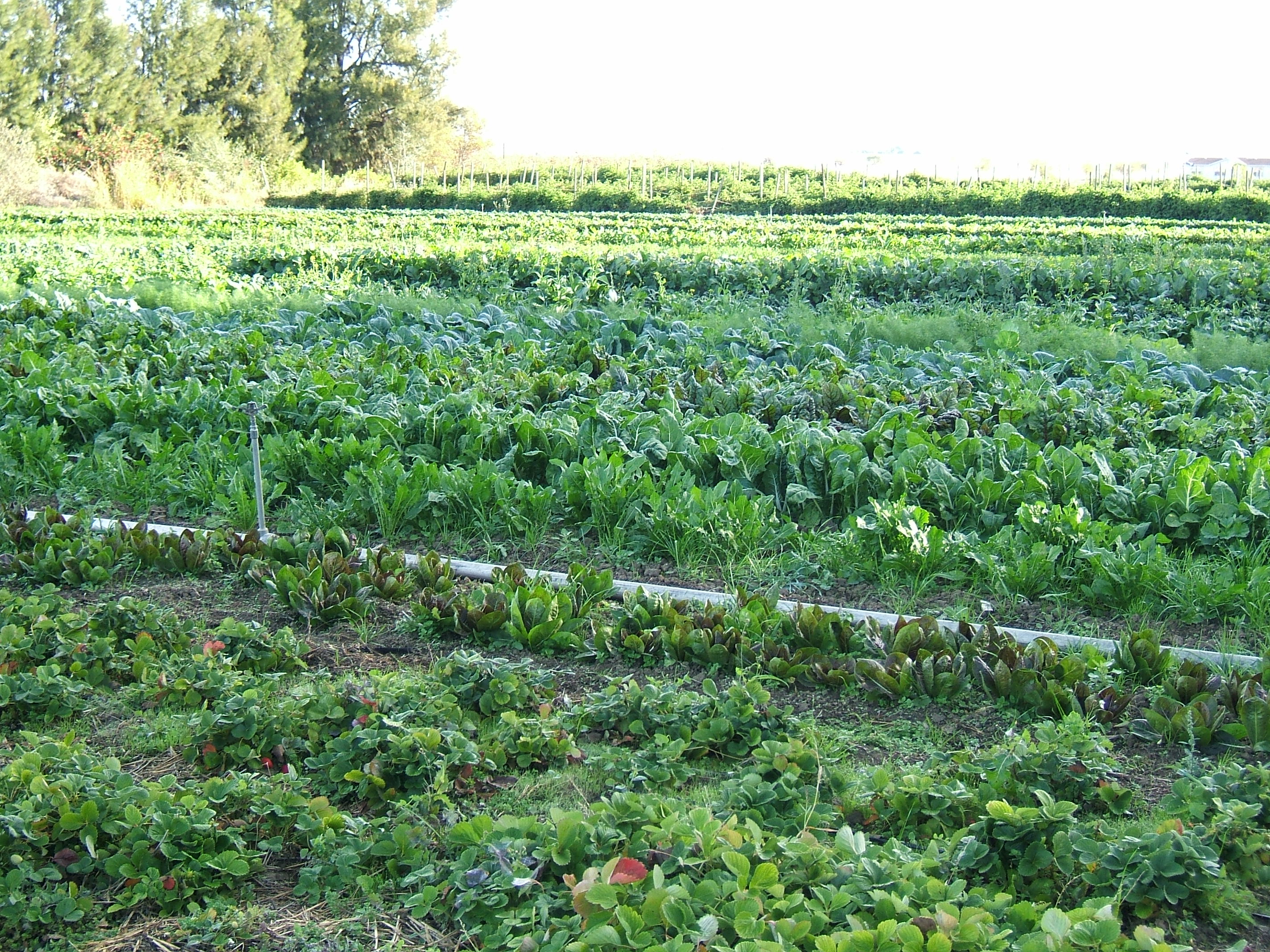
For most small Romanian producers the word "bio" sits somewhere between aspiration and bureaucratic obstacle. The aspiration is real — many families have farmed without synthetic inputs for decades simply because buying them was expensive or difficult. The obstacle feels real too, because the official certification pathway is administered in a language of dossiers, inspections and waiting periods that can seem designed for large operations rather than a two-hectare vegetable plot. Neither impression is quite accurate.
What follows is a walkthrough of how the process actually works under the current EU Organic Regulation (EU) 2018/848, which Romania incorporated into national practice starting with the 2022 growing season.
The regulatory framework
Organic production in Romania is governed by two overlapping structures. At the EU level, Regulation (EU) 2018/848 sets the production rules: what inputs are permitted, how animals must be kept, what the conversion period must cover. At the national level, the Ministry of Agriculture and Rural Development (MADR) maintains a register of approved inspection and certification bodies (OICs) and publishes annual operating orders that adapt the EU framework to Romanian administrative practice.
The practical implication for a producer is that the EU Organic logo and the Romanian bio certificate are awarded by the same process — you do not need a separate national certificate if your OIC issues a certificate under EU 2018/848.
Approved inspection bodies
As of early 2026, MADR had approved fourteen OICs operating in Romania. The most active ones for small vegetable and arable producers include Ecoinspect, Ecocert Romania, LACON and Bio Cert. Each charges differently: application fees, annual inspection fees and, in some cases, a per-hectare surcharge. The MADR register (madr.ro/agricultura-ecologica.html) lists current accreditations and contact details.
Choosing between them is partly practical — the nearest body reduces travel costs for on-site inspections — and partly a matter of how much documentary support they offer during the application phase. Some OICs assign a coordinator who reviews your draft farm plan before formal submission; others simply hand you a checklist. For a first-time applicant, the coordinator model is noticeably less stressful.
The conversion period
Before a product can be sold as "bio" or carry the EU Organic logo, the land must go through a conversion period during which it is farmed to organic standards but the output is not yet certified. For annual crops (most vegetables, cereals, legumes) the conversion period is two years calculated back from the first day of the certified harvest. For perennial crops — orchards, vineyards — it is three years.
The two-year clock starts from the date your OIC formally registers your operation in the MADR system, not from when you signed your contract with them. This distinction matters: an application submitted in autumn may not generate a registration date until the following spring, effectively losing a full growing season from the conversion countdown.
Land farmed without synthetic inputs for several years before formal application does not automatically reduce the conversion period. You can request a shortened conversion period, but it requires documented evidence — soil test history, input purchase records, or a prior inspection note — and the OIC must formally recommend the reduction to MADR. In practice, shortened conversion periods are approved for perhaps one in five applicants who request them.
What the application file contains
The core document is the farm plan (plan de producție ecologică), which maps parcels to the Cadastral Register identifiers, states the crops intended for each parcel and describes the management practices to be used. Supporting this, you need:
- Land title or lease agreements covering the declared parcels
- APIA (Agency for Payments and Interventions in Agriculture) farmer registration number
- A signed declaration that no prohibited inputs have been used in the preceding two years
- Soil analysis reports (not always mandatory at the application stage, but required before the first certified harvest in most OIC contracts)
- Water source documentation if irrigation is used
For producers already enrolled in APIA subsidy schemes, much of the land documentation is already in the system. The OIC coordinator can cross-reference your APIA data rather than requiring duplicate paper copies.
The inspection cycle
Once registered, every certified operation receives at least one scheduled inspection per year, typically in the period of peak crop activity. OICs may also conduct unannounced inspections, though in practice these are rare for small operations without a prior violation history. During the inspection, the inspector walks the parcels, reviews the input log (the journal of every substance applied to the land) and checks that stored produce is separated from non-certified goods if the farm also handles conventional production.
The input log is the document most likely to cause problems at inspection. It must record every application of fertiliser, compost, plant protection material or seed treatment with the date, parcel identifier, product name and quantity. Gaps or retrospective entries are flagged immediately.
Costs and subsidy interaction
OIC fees for a small farm (under five hectares, vegetables and cereals) typically fall between 400 and 900 RON per year including the annual inspection. Larger farms or mixed livestock operations pay proportionally more. These costs are partially offset by CAP eco-scheme payments available through APIA for farms that maintain certified organic status.
Under the current CAP Strategic Plan for Romania (2023–2027), certified organic producers on arable land receive an eco-scheme supplement on top of the basic area payment. For 2025, this supplement was set at approximately 115 EUR/ha for arable and 145 EUR/ha for horticulture, though the figures are recalculated annually. Check the current APIA campaign documentation for updated values each January.

After certification
The certificate issued by the OIC is an annual document that lists the certified parcels, the crops covered and the scope of certification (whether it covers only primary production or also on-farm processing and packaging). When selling at a farmers market, you are legally required to have the current-year certificate available on request. When supplying a retail buyer or processor, they will typically require a copy as part of their own audit trail.
Loss of certification — through a violation finding or a voluntary withdrawal — does not automatically restart the full two-year conversion period if the producer re-applies within twelve months. The OIC assesses the situation individually. However, any parcel on which a prohibited input was detected must go through a full new conversion period regardless of timing.